
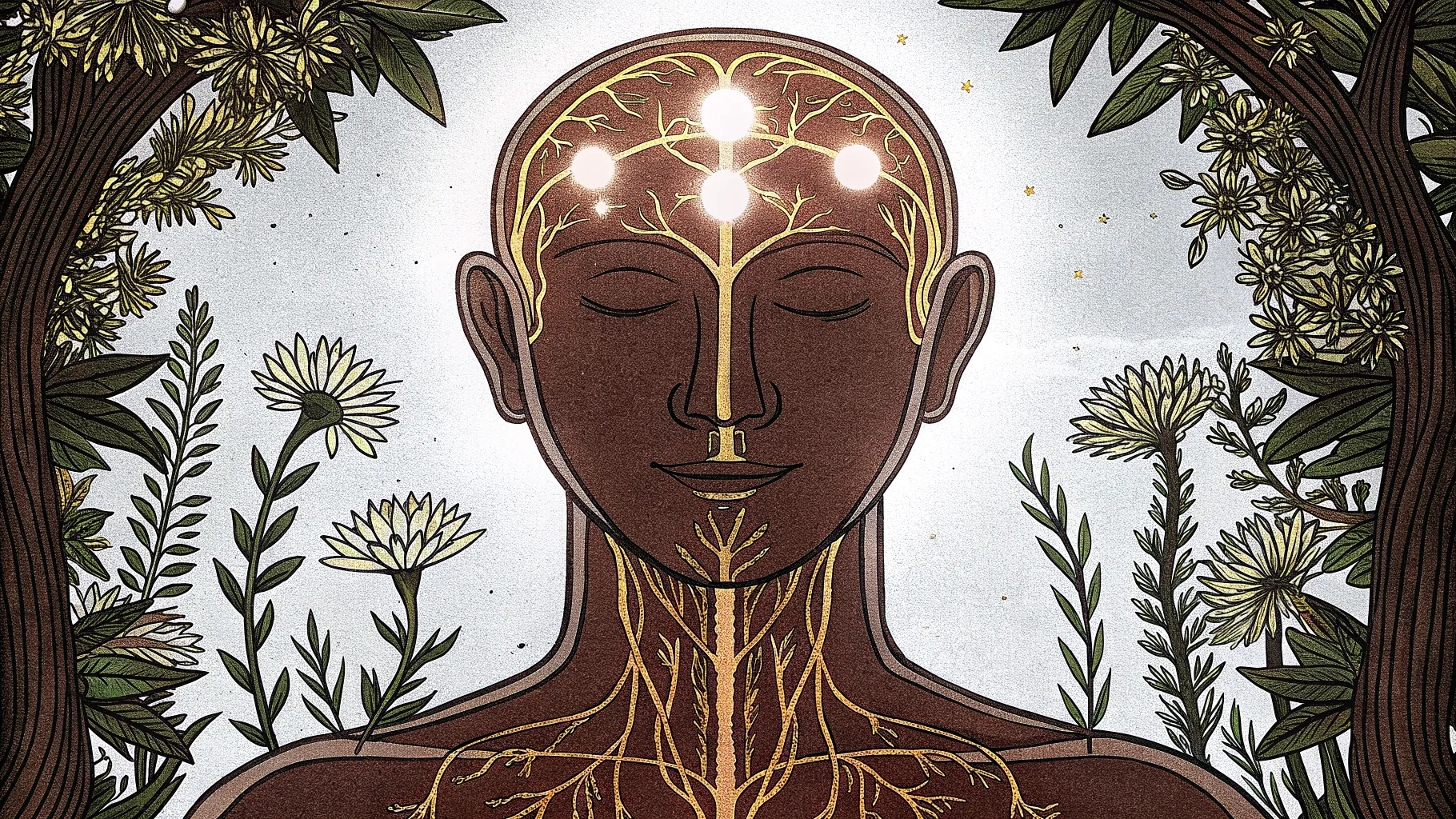
In a recent interview Seja Popham, founder of the School of Evolutionary Herbalism. Discussed a clinical perspective on rebuilding a worn-out nervous system using nervine herbs—especially the often-overlooked category called nervine trophorestorative. If you feel chronically wired, depleted, sensitive to stimuli, or like your energy swings wildly during the day, these herbs are worth your close attention.
Table of Contents
- Why nervines before adaptogens?
- Understanding nervine categories
- What nervous system exhaustion looks like
- The lead triplet: herbs that rebuild the nerves
- Four supportive aromatic nervines
- Simple restorative formula (a balanced starting blend)
- Practical guidance and safety notes
- Putting it into practice
- Closing thoughts
Why nervines before adaptogens?
Our culture rewards speed and stimulation: city living, deadlines, poor sleep, stimulants, and constant sensory input. Over time that wears the nervous system down. A common reflex in natural medicine is to reach for adaptogens, but in practice you often see nervous system exhaustion long before true endocrine (adrenal) burnout.
People tend to reach a state of nervous system exhaustion before they reach a state of true endocrine system burnout.
If you give strong adaptogens to someone whose nervous system is already depleted and vulnerable, you can inadvertently overstimulate them and make things worse. Nervine trophorestorative rebuild and strengthen nerve tissue and tone—so they are frequently the more appropriate first line of support.
Understanding nervine categories
Broadly speaking, you can think of nervines in three useful categories:
- Nervine sedatives / relaxants — gentle daily-use herbs that calm nerve tone and support parasympathetic activity without sedating you into sleep.
- Nervine hypnotics — stronger remedies that induce sedation and can promote sleep or deeper relaxation (e.g., valerian, hops, passionflower).
- Nervine trophorestoratives — the rebuilding herbs. They nourish, strengthen and replenish an exhausted nervous system rather than simply sedating it.
What nervous system exhaustion looks like
The old herbalists called this state neurasthenia. You may recognize it by a cluster of signs and symptoms:
- Chronic fatigue with fluctuating energy (high then very low)
- Difficulty falling or staying asleep
- Heightened sensitivity to noise, touch or light
- Irritability, tension, muscle spasm or cramping
- Anxious, thin, dry, or cold presentation (qualities that overlap with Ayurvedic Vata)
For many people in that state, trophorestorative nervines are the best place to start.
The lead triplet: herbs that rebuild the nerves
From a Western herbal perspective, three herbs stand out as classic nervine trophorestoratives. In clinical use I rely on them most frequently, and when prepared and used properly they can shift a client's state significantly in weeks.
- Avena sativa (Milky oat seed)
Use the fresh seed tincture. At a particular milky stage the seed exudes a sweet white latex that is primarily alcohol-soluble—this is the part with strong trophorestorative action. While dried oats are nutritive and mineral-rich, the fresh tincture extracts the nerve-strengthening constituents you want for rebuilding. - Scutellaria lateriflora (Skullcap)
The fresh leaf tincture is deeply restorative without being overtly hypnotic. (Note: skullcap’s hypnotic effects are best gained via warm infusion or powdered herb rather than a boiling-water tea.) Fresh skullcap tincture is a long-standing nervine tonic in Western herbalism. - Hypericum perforatum (St. John’s Wort)
A gentle relaxant with an uplifting, heart-centered quality—think of it as a "shen tonic" that supports mood and nerve integrity. It is especially valuable for nerve pain and for bringing an enlivening warmth and resilience to the nervous system.
Why these three work well together
The triplet is constitutionally balanced: milky oats are neutral and moistening, skullcap is cooling and bitter, and St. John’s Wort is aromatic, resinous and warming. Together they rebuild nerve tissue, soothe excitability, and offer an energetically balanced formula that can be used as a foundation for restoration.
Four supportive aromatic nervines
There are four aromatic, volatile-leaf herbs that pair beautifully with the lead triplet. They don’t sedate you into sleep but they calm the nervous system, enhance resilience, and help disperse and integrate the deeper trophorestoratives throughout the nervous system:
- Lavandula angustifolia (Lavender) — calming for the mind and very useful for cerebral tension and racing thoughts.
- Melissa officinalis (Lemon balm) — excellent for digestion and for calming cardiac excitability or palpitations associated with anxiety.
- Turnera diffusa (Damiana) — gentle calming, supportive for mood and nervous resilience.
- Ocimum sanctum (Holy basil / Tulsi) — adaptogenic in a mild way, particularly helpful for an overactive mind and for balancing the head/heart connection.
These aromatic herbs contain essential oils that have a strong affinity for neural tissue and can help “drive” the heavier trophorestoratives into the nervous system, improving integration and effect. They also support digestion—important because chronic sympathetic arousal depresses digestion and impairs parasympathetic repair processes.
Simple restorative formula (a balanced starting blend)
Here is a small, constitutionally balanced formula I often use as a foundation for nervous system restoration. The percentages indicate proportion of the formula by herb.
- Avena sativa (Milky oat seed) — 20%
- Scutellaria lateriflora (Skullcap) — 20%
- Hypericum perforatum (St. John’s Wort) — 20%
- Lavandula angustifolia (Lavender) — 10%
- Ocimum sanctum (Holy Basil / Tulsi) — 10%
- Melissa officinalis (Lemon Balm) — 10%
- Turnera diffusa (Damiana) — 10%
This is a small, approachable formula: warming, cooling and neutral elements in balance. It can be used as a tincture protocol or adapted into other preparations with guidance from a herbal practitioner.
Practical guidance and safety notes
- Use fresh-seed tinctures for milky oats and fresh-leaf tinctures for skullcap when you want the strongest trophorestorative action—those specific preparations extract the key constituents.
- Expect to see meaningful changes in weeks; many people notice significant improvements after about six weeks on a trophorestorative protocol, though individual responses vary.
- If you plan to use adaptogens, consider building nervous system resilience first with these trophorestoratives, or use them alongside adaptogens rather than replacing them. They often increase the tolerability and effectiveness of adaptogens.
- Important safety note: Hypericum (St. John’s Wort) interacts with many medications (including SSRIs, oral contraceptives, anticoagulants and others) and can affect liver enzyme activity. It is not appropriate in all situations (for example, in bipolar disorder it may provoke mania). Always check with a qualified healthcare professional before using St. John’s Wort or any new herbal protocol, especially if you take prescription medicines, are pregnant or breastfeeding.
- When in doubt, consult a trained herbalist or clinician for individualized dosing and preparation recommendations.
Putting it into practice
Begin by assessing whether the primary issue is nervous-system depletion rather than endocrine failure. If the signs align with nervous exhaustion—sensitivity, fluctuating energy, anxiety, poor sleep—start with a trophorestorative approach: the milky oat + skullcap + Hypericum foundation supported by aromatic nervines (lavender, lemon balm, tulsi, damiana).
Use proper preparations (fresh tinctures where indicated), give the protocol sufficient time (several weeks to months depending on severity), and monitor how you feel. If you later add adaptogens, do so carefully and often in combination with the nervine trophorestoratives to avoid overstimulation.
Closing thoughts
If your nervous system feels frayed or depleted, remember that rebuilding is possible. Nervine trophorestorative offer a gentle but potent pathway to restore nerve tone, improve sleep and mood, reduce sensitivity, and bring you back toward an even, repair-oriented state.
For more in-depth training and resources, visit evolutionaryherbalism.com and consider reaching out to a qualified herbal professional who can help you tailor a safe formula for your situation.


